
Mental Training and Sport pt 1: Identity
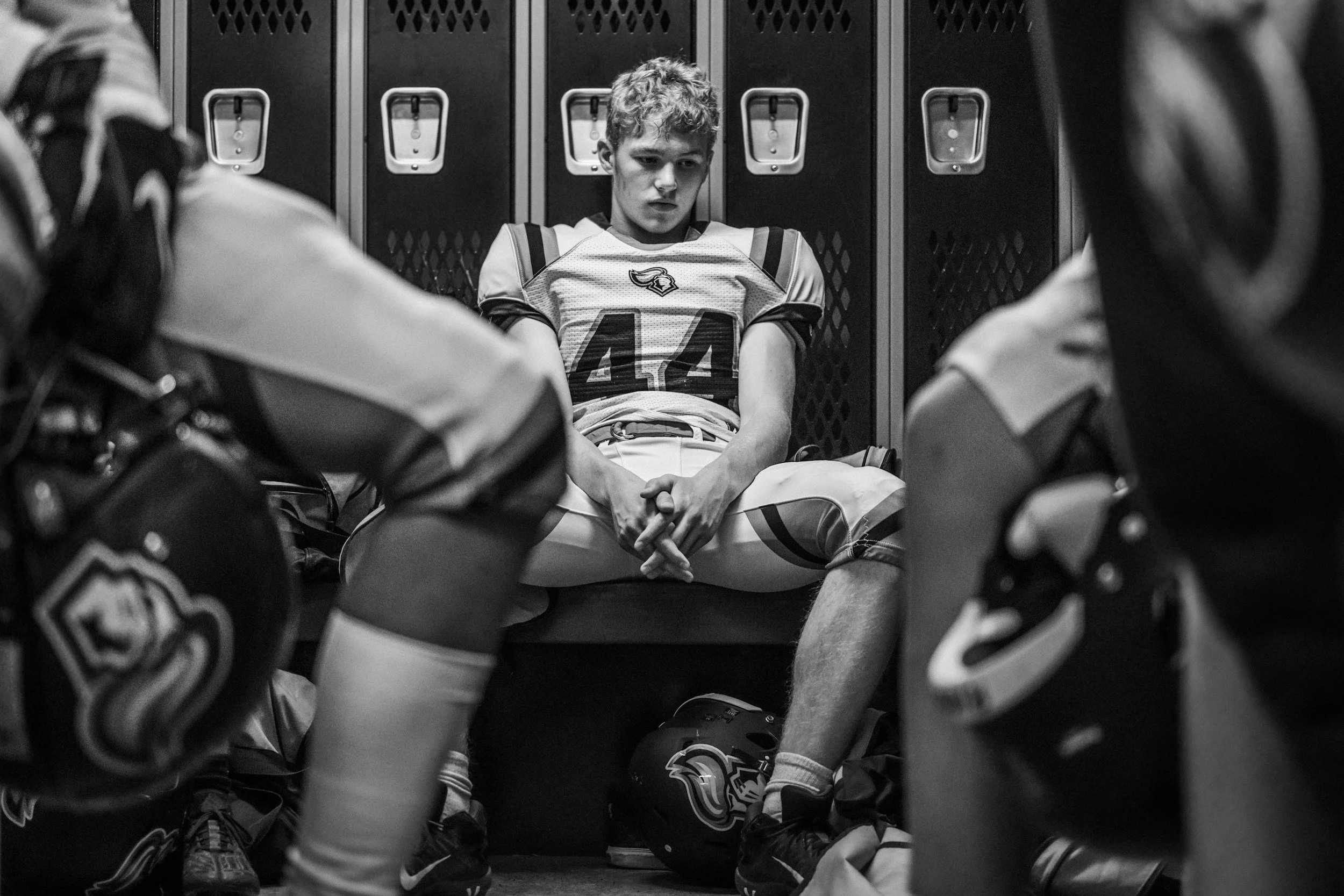
As a strength and conditioning coach, it’s my job to help keep you playing the sports you love. Along the way if you develop a love for the weight room that’s a definite bonus, but one of the key functions of my job is to help you make the important connection that your effort and habits in training have a direct correlation with your chance of success in your respective arena. Most of this is done by helping athletes make the mental connection, as most are very ready to physically respond to what we do. Fewer, however, approach it with a degree of mindfulness.
I think a lot of strength and conditioning coaches in my position supremely underrate the mental and psychological equation of their jobs. An athlete’s story and how they found some level of success is very relevant to their ability to continue succeeding and problem solving.
Breaking this concept down
A common archetype I encounter is the “survivor.” This is the person who has been dealt a variety of tough breaks, but has used them as motivation to improve and push forward. These people are sometimes described as “having a chip on their shoulder,” and they’ll be the first to tell you about how hard they had it to get to where they are. They take a great deal of pride in their accomplishments and what they overcame to get there.
These people are often remarkable in their ability to shoulder high training loads and are always ready to prove themselves.
While those are all positive attributes, there are two big problems that emerge with these athletes:
They are extrinsically motivated: they’re often lost without someone giving them a reason to get up, get angry, or prove wrong.
From a perspective of identity, it’s very limiting to be known merely as a survivor. There isn’t enough focus on growth and what comes next. .
Extrinsic motivation is a powerful card to play as a coach, or even to yourself internally. The problem is, that there’s a limit to how much you can pull that lever. There are people more educated than myself on the matter, but if you need a scientific explanation, I chalk it up to a progressive blunting of the dopamine effect they get from training and the motivation to prove someone wrong.
Psychologically speaking, I am far more interested in the second of the points above: “being limited to being known as a survivor, and not a person worthy of winning.”
My issue with the “survivor archetype”
If you spend enough time around competitive athletics, you learn that winning is really a habit. It’s a habit that comes from repetition, preparation, the right strategy, and a little bit of luck. The “luck” component is usually from all the other things that come before it: prepared individuals tend to find themselves in opportunistic situations.
Everything about the profile of winners just described is procedural, none of it is identity. Which is true: winning is an outcome, not an identity. You can see yourself as a winner, but that comes from procedure and results - it can’t simply be invented.
Focusing on your success being a result of “surviving” isn’t really success at all. In fact, the athletes I’ve come to serve who cite all their hardships are usually the ones not at the top, but rather the ones stuck in a middle ground of results.
Surviving in other forms
Sometimes the “surviving” isn’t an identity, it’s a rut that an athlete is physically in because of poor training practices that are running them down into the ground. High levels of fatigue? Basic enjoyment towards training and life disappearing? Feeling increased pressure from having some level of success? These are all things that lead people to feel like they’re just “surviving” training.
The answer I find most helpful for athletes in this situation is the same that I find for the “survivor archetype.”
The Answer
If you find yourself as someone who is stuck in the “surviving” mentality in training, your best path forward is to do what I already hinted at above: focus on the processes and practices that move you forward. They can (and should) be hard, but also sustainable. Most importantly, they should have an end in mind that puts you where you want to be. The goal can be winning, but your attention should be focused entirely on the tasks and not the outcome or anything related to identity.
In fact, if you need an identity: it should be that of a professional: someone who goes to work every day to do a job. That job is everything you need to do to get better at your sport. You may not be a professional athlete, but the same mentality should be applied to your preparation in the time allotted to it in your day.

About the Author:
Mark DiSalvo, CSCS
Mark is the founder and owner of DiSalvo Performance Training. He brings over a decade of experience training clients and athletes of all backgrounds and is the strength and conditioning coach to athletes of all levels and disciplines, from youth to professional and Olympic-level.
A graduate of Northeastern University, he’s an NSCA Certified Strength and Conditioning Specialist (CSCS) and Sports Performance Expert. He’s also a Steve Maxwell Certified Kettlebell Instructor (Levels 1 & 2).
You can read more about him here.