3 Rules for Success as an Athlete
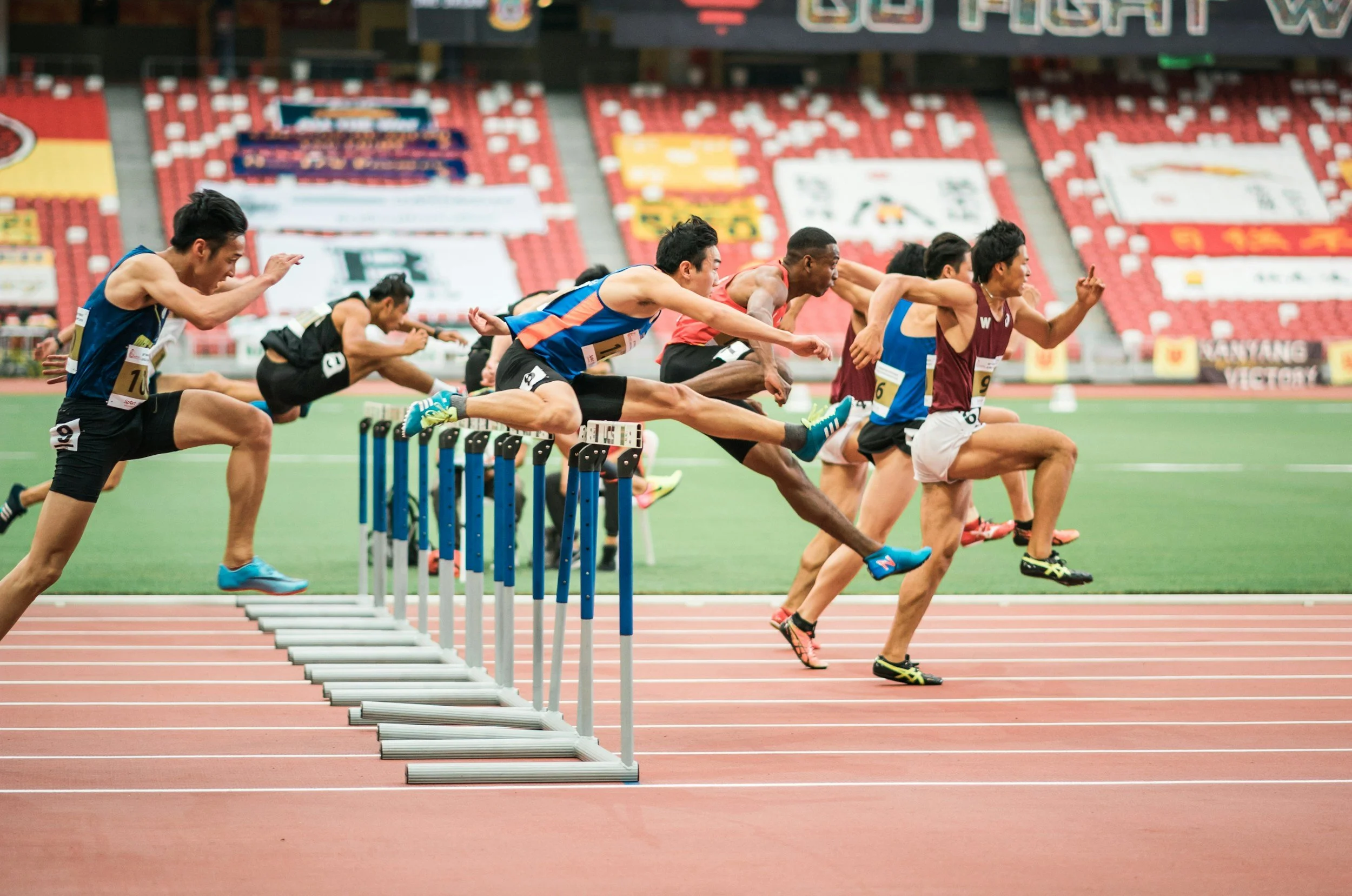
There are so many ways to reach your goals, and as I spend time with athletes in all different sports, I always enjoy hearing their stories and paths to development. From how they fell in love with the game to how they trained and competed on their way to the present: it’s all relevant in how we approach training in the weight room.
Unfortunately, it’s also my experience that too many athletes are preoccupied with how their path is somehow imperfect because it doesn’t follow the blueprint of a famous athlete they admire, or even their peers.
Some examples of things I’ve heard:
I HAVE to compete at blue belt because I’ll just be facing the same guys at purple belt.
I am not as muscular as I need to be to compete with these guys in Junior.
If I’m going to be scouted, I need to attend “x” camp.
My daughter isn’t going to be scouted for D1 unless she’s in a program now (she is 8 years old).
Think About It This Way (i.e. don’t take my word for it)...
I recently came across an interview with Rick Celebrini, who is best known by some as the father of Macklin Celebrini, the star Canadian forward for the San Jose Sharks. However, Rick has spent his career as a performance coach, both inside his own facility and with multiple pro sports teams (currently the Golden State Warriors). If there was ever someone qualified to speak on the qualities that can help make an athlete successful, it’s Rick Celebrini.
Rick shared with the interviewer that throughout his time raising Macklin and guiding him through growing up as an athlete, he had 3 “rules” for him to remember when working with coaches or inside of different programs:
Who is going to look out for “all of you,” not just the athlete [portion]?
Who is going to create and foster a love of the sport?
Who is going to help you build a foundation for a lifelong pursuit of that love?
Notice how none of these concepts involve metrics, benchmarks, or physical measurements of success. The link between all was sustainability and love of your sport.
I couldn’t agree more with these three items and I think it’s so important that it was worth sharing with everyone reading this. Not only are these “rules” universal, I’ve seen them play out this way an infinite amount of times in my coaching career.
“Nobody cares about how much you know until they know how much you care.” - Theodore Roosevelt
“Relationships are built at the speed of trust.” - Charles Poliquin
Both of these axioms lean on the idea that nothing worth having is done overnight. Relationships, which are foundational in coaching and drive success between a coach and an athlete, take time to develop. The concept should be intuitive, especially if you relate it to the closest people in your life. But when it comes to sports and training, we tend to want to re-write the rules and see progress at light speed.
Sometimes athletes inside of individual sports are quick to switch coaches at the first sign of trouble. Instead of having a conversation or working through problems with their coach, there’s a temptation to find the next coach who has “the answer.” We all know athletes who have gotten caught up in that way of thinking.
One thing I was lucky to learn from Charles Poliquin before he died was that there wasn’t a single Olympic level athlete in his career (which included 26 Olympic gold medals across different sports) that didn’t love the sport they competed in. When things get rough (and they will), you need to lean on something intrinsic rather than just success, money, likes on Instagram, or even winning. That thing to lean on is love of the game. There’s no other reason to be doing it if you don’t love it. For those who disagree, I would wager that when whatever reason you have for playing runs dry, you’ll be done. Love of the game, on the other hand, will present you with infinite opportunities. These opportunities can take shape in ways you can’t even imagine— especially post-playing career.
Foundational Tools
It seems almost silly to end this article this way, but the third item on Rick’s list is where we start to put the rubber to the road. Building on the relationship between coach and player and the love of the game, your ultimate goal as an athlete is to take the knowledge given to you by coaches and repeatedly apply it to your sport. More importantly, through this application, you must always be evolving it to make it yours.
Conclusion
If you got nothing else from this, I hope you can take Rick Celebrini’s advice moving forward when auditioning or interviewing coaches, whether it be strength and conditioning, skills, or otherwise. If you do that, there’s no way you can go wrong.

About the Author: Mark DiSalvo, CSCS
Mark is the founder and owner of DiSalvo Performance Training. He brings over a decade of experience training clients and athletes of all backgrounds and is the strength and conditioning coach to athletes of all levels and disciplines, from youth to professional and Olympic-level.
A graduate of Northeastern University, he’s an NSCA Certified Strength and Conditioning Specialist (CSCS) and Sports Performance Expert. He’s also a Steve Maxwell Certified Kettlebell Instructor (Levels 1 & 2).
You can read more about him here.