Scapular Function is the Key to Shoulder Health

When it comes to injuries or complaints of pain from clients and athletes, you can almost guarantee that the shoulders are going to be a culprit.
It’s easy to see why: whether you’re an athlete who demands constant performance from the joint, or a lifter who also has to spend much of your time sitting at a desk and driving, you know the stress your shoulders are under nearly every hour of the day.
However, to truly understand how to train your shoulders, promote mobility, manage pain, and reach peak performance, you need to understand that the key to shoulder health is healthy scapular function.
What is the scapula?
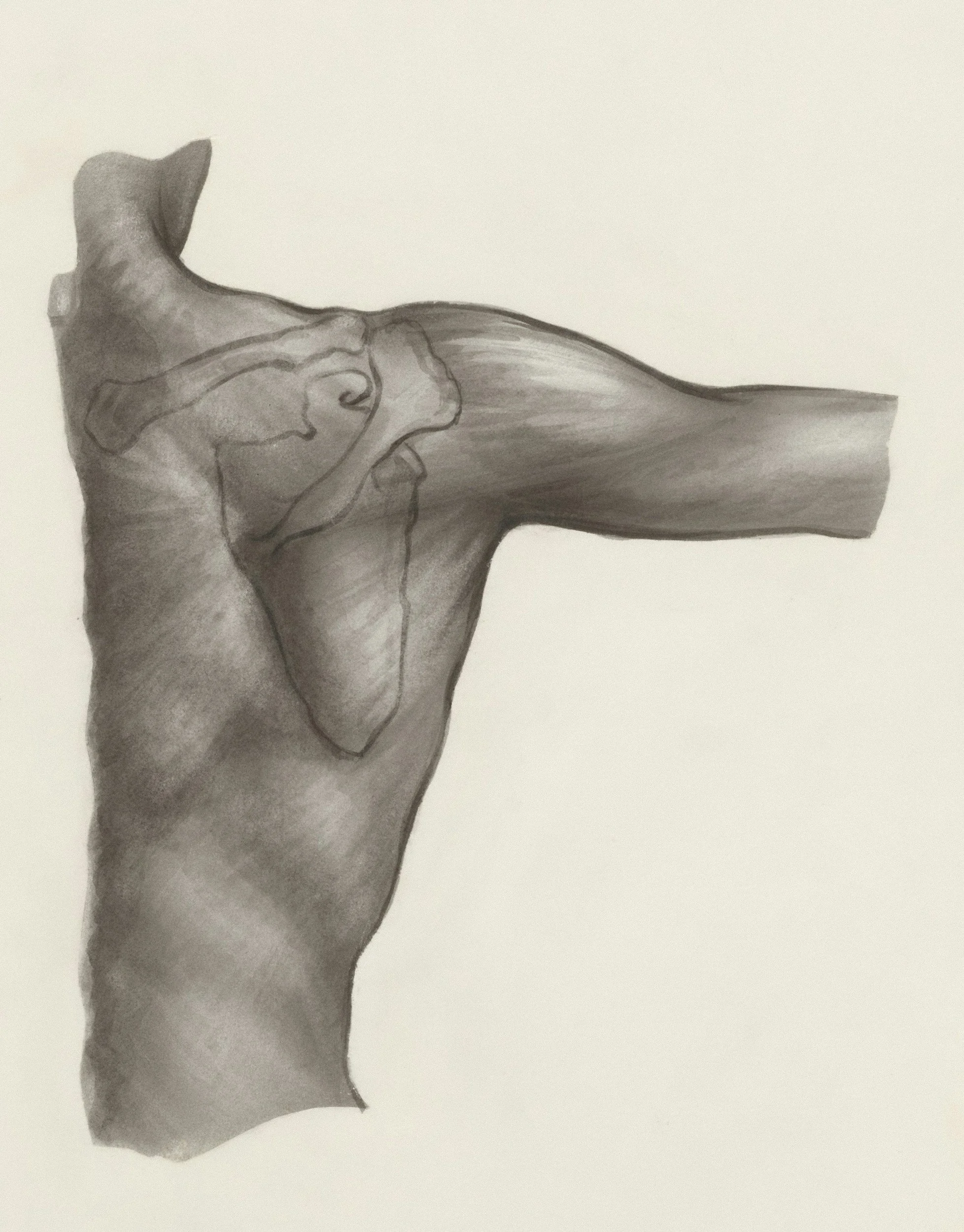
The scapulae are large, plate-like bones on your back otherwise known as your shoulder blades. These two bones need to move without inhibition, stabilize properly, and perform one of their many functions in order for your shoulders to remain pain-free, mobile, and strong.
There are roughly 10 movements and functions of the scapula, which means there’s a lot of opportunity for one or more of these functions to give you trouble. However, most people can focus on the following:
Elevation
Depression
Retraction
Protraction
Upward/Downward Rotation
Shoulder Abduction/Adduction
Each of these functions are explained in greater detail in our Shoulder Health YouTube resource (linked above).
Without the ability to freely move your scapulae and articulate each function, we become limited in our available range of motion to complete movements or physical tasks. Without that full range available, our bodies will make decisions on how to complete the task without the required range. Those decisions are often called compensations, and ultimately increase the chance of injury as they persist and aren’t properly managed.
For example: the upward rotation of the scapula and external rotation of the shoulder are very important for athletes who throw a ball overhead. If either of those functions are compromised, the result is going to naturally be someone who has an impaired ability to throw the ball. Think of a water polo or baseball player who can’t properly get his arm overhead to throw a ball.
Exercises and How To Train These Functions
When you can correctly identify the ranges of motion and functions your scapula lacks, you can much more effectively and easily identify the exercises that will help your shoulders in both their strength and durability.
As mentioned and linked above, we filmed a comprehensive resource on shoulder function. We outline at least one exercise for each function, but also give you the tools to self-test and see where you may be having some trouble with your shoulders.
Here’s a few select exercises and images you can use as a quick resource to start working your shoulders and keeping each function healthy.
Elevation: Shrugs
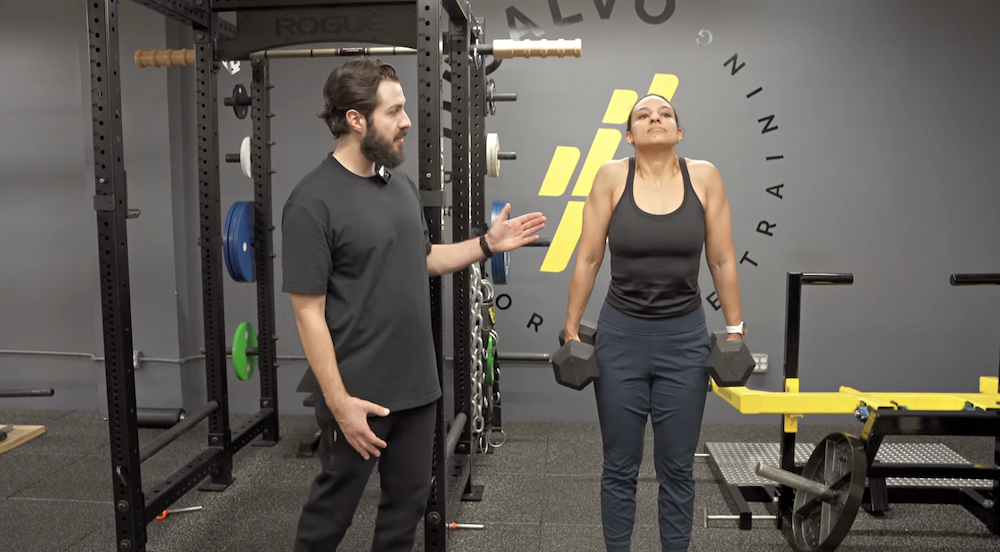
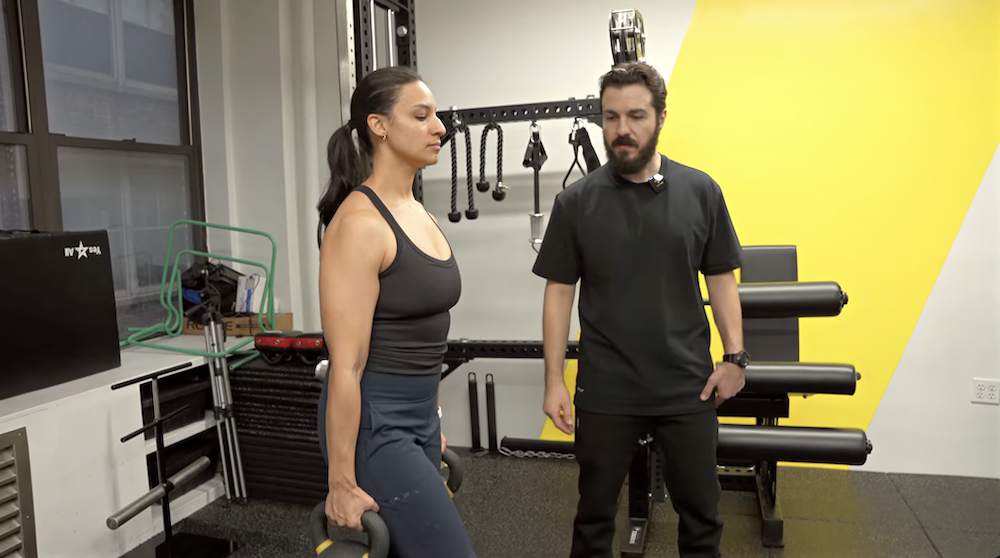
Depression: Farmer’s Carries
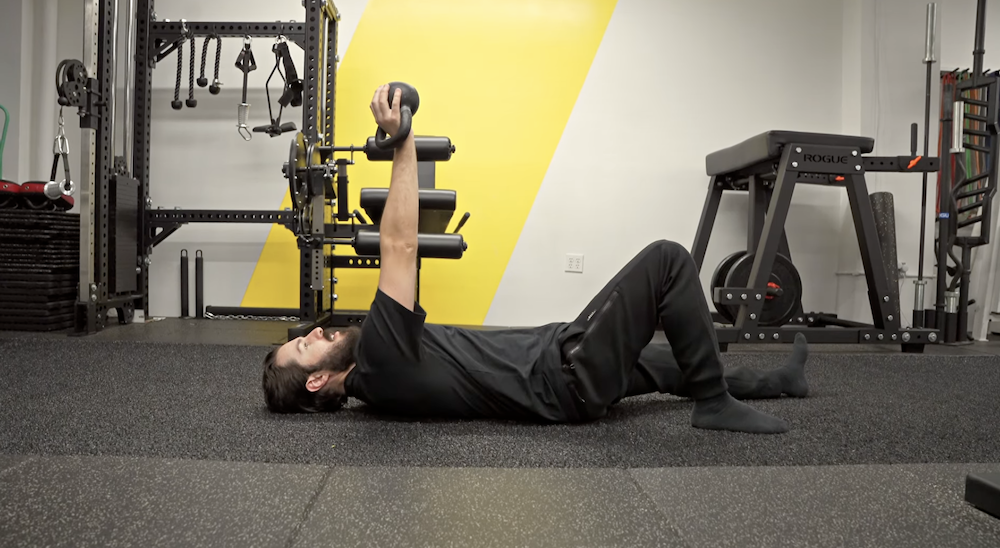
Protraction: Supine Serratus Punches with KB/DB
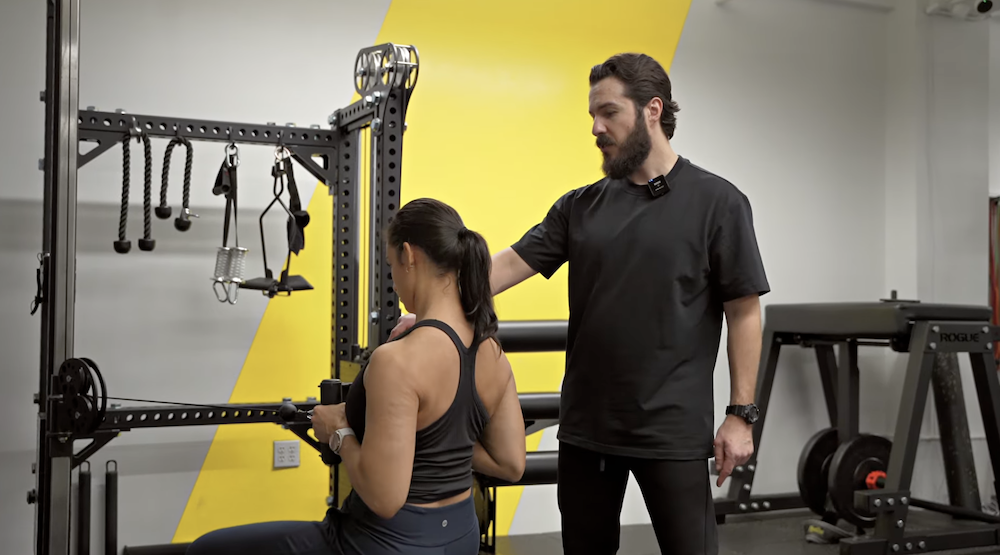
Retraction: Seated Rows
Conclusion
We filmed our full shoulder resource to be of help to anyone who is experiencing some shoulder discomfort and is looking for a simple, but comprehensive way to approach training their way back to function and health. Unfortunately, sometimes past injuries, surgeries and individual differences dictate that working around injury or impairment isn’t so easy. In those cases, we recommend you reach out to us or a qualified local trainer who has experience and education to work around your own movement profile.

About the Author: Mark DiSalvo, CSCS
Mark is the founder and owner of DiSalvo Performance Training. He brings over a decade of experience training clients and athletes of all backgrounds and is the strength and conditioning coach to athletes of all levels and disciplines, from youth to professional and Olympic-level.
Mark is currently purple belt in Brazilian Jiu Jitsu, with over 10 years of experience grappling.
A graduate of Northeastern University, he’s an NSCA Certified Strength and Conditioning Specialist (CSCS) and Sports Performance Expert. He’s also a Steve Maxwell Certified Kettlebell Instructor (Levels 1 & 2).
You can read more about Mark here.