Golf is a game of great skill. There’s no substitute for getting out on the course or the range, or better yet, lessons from a qualified golf pro. However, just like any sport, your physical body and its capabilities are going to determine your ability as much as the skill itself.
Whether it’s increasing your swing speed, producing more ground force, or just a general desire to be a stronger, more sturdy human and golfer, the following 5 exercises (and their variations) are great in helping you build strength, stability and overall “durability” as a person.
A Quick Note on Strength and what it means for golfers:
You’ll find a great deal of methods, information, and opinions both online and out in the world about what golfers should focus on off the course. The information presented here is meant to help golfers understand that the weight room can be a powerful tool in their athletic development at any age. No matter how much mobility, flexibility, or finer movement training you do, there needs to be some kind of strength base. It may not resemble that of a wrestler or olympic weightlifter, but a golfer still needs to be strong, as it’s the basis for driving and overall shot distance. I have previously written why strength (and other concepts that exist in physiology) matter to golfers.
Deadlift Variation

The really important thing to understand about the deadlift is that, regardless of whether you’re using a barbell, kettlebell, trap bar, etc., it’s an exercise that trains your hip extension maximally through a classic hip hinge. It is also an exercise that helps you use that all-important term you hear your golf instructor or YouTube guru go on about: “ground force.”
To properly utilize and get the most strength out of pushing off the ground, you need to train your hips to extend and do it in a variety of ways. The best place to start is to get stronger.
Building strength not only has a positive effect on your actual performance, but also recovery and lowering your probability of injury.
Landmine Press
Golfers need overhead stability. And by stability, I mean strength. Unfortunately, we all know that getting overhead can be a chore for some. Whether your shoulder is impinged, tight, immobile, or whatever ails you, the landmine is a great choice because it can be scaled to your ability level.
The landmine press is fantastic, and like all good inventions, is brutally efficient and simple. It utilizes a simple pivot point into which you insert a barbell in order to create a lever-style resistance machine. You can insert a barbell that weighs 10lbs (if you have it), or one that weighs 45lbs, and add weight as you go along. Most importantly, the user can kneel, hinge, lean, or stand in a way that angles the bar in a comfortable range.
Eventually, the strength you build overhead shows in the golf swing as an increased ability to keep your shoulders in the position you want them to be (not shrugging or immobile), and there’s some strength to the overall structure that will help you increase the power on those ball strikes.
Palloff Press
The thing about the first two exercises I listed is that they both involve heavy use of the core for stabilization.
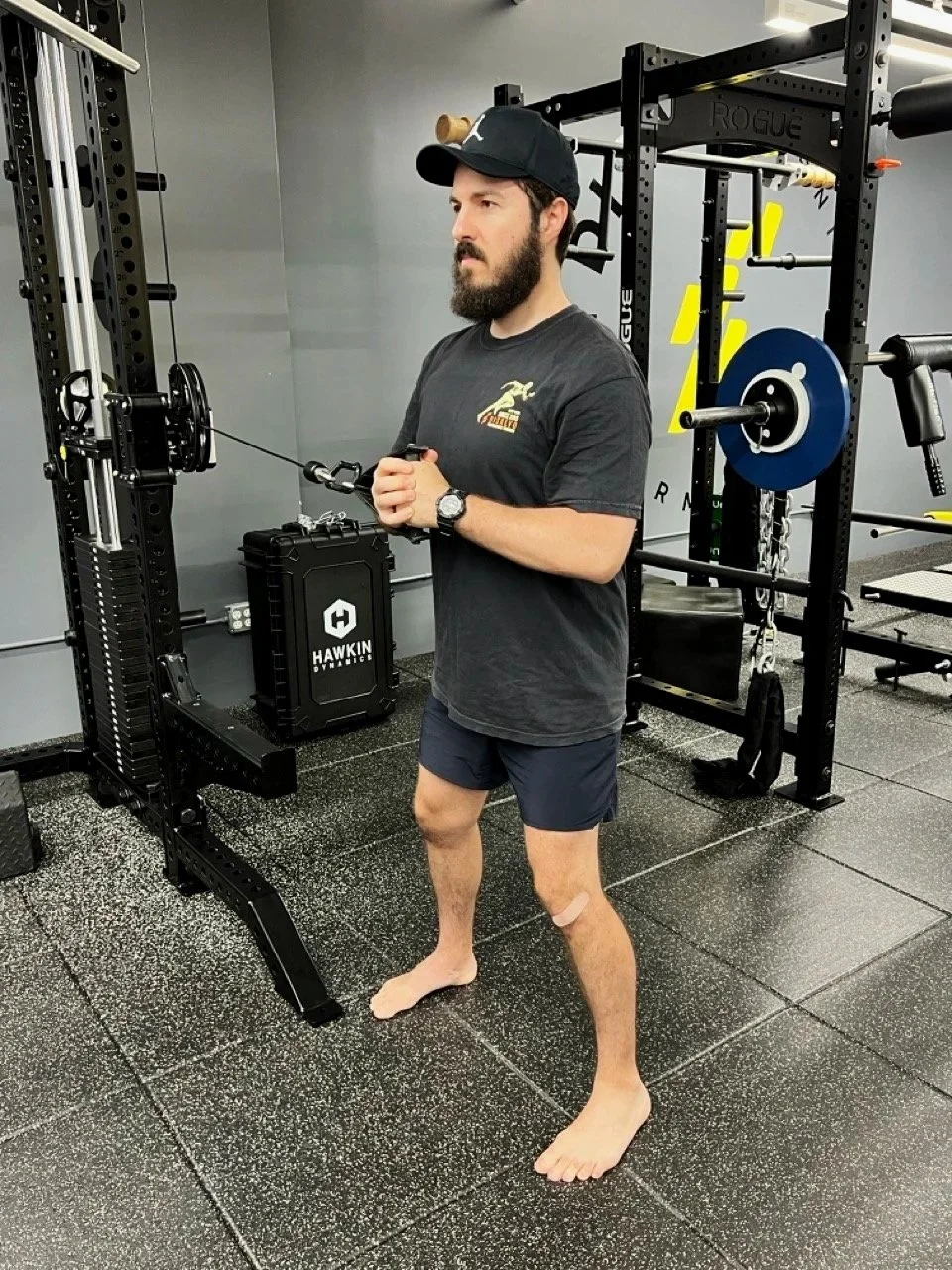
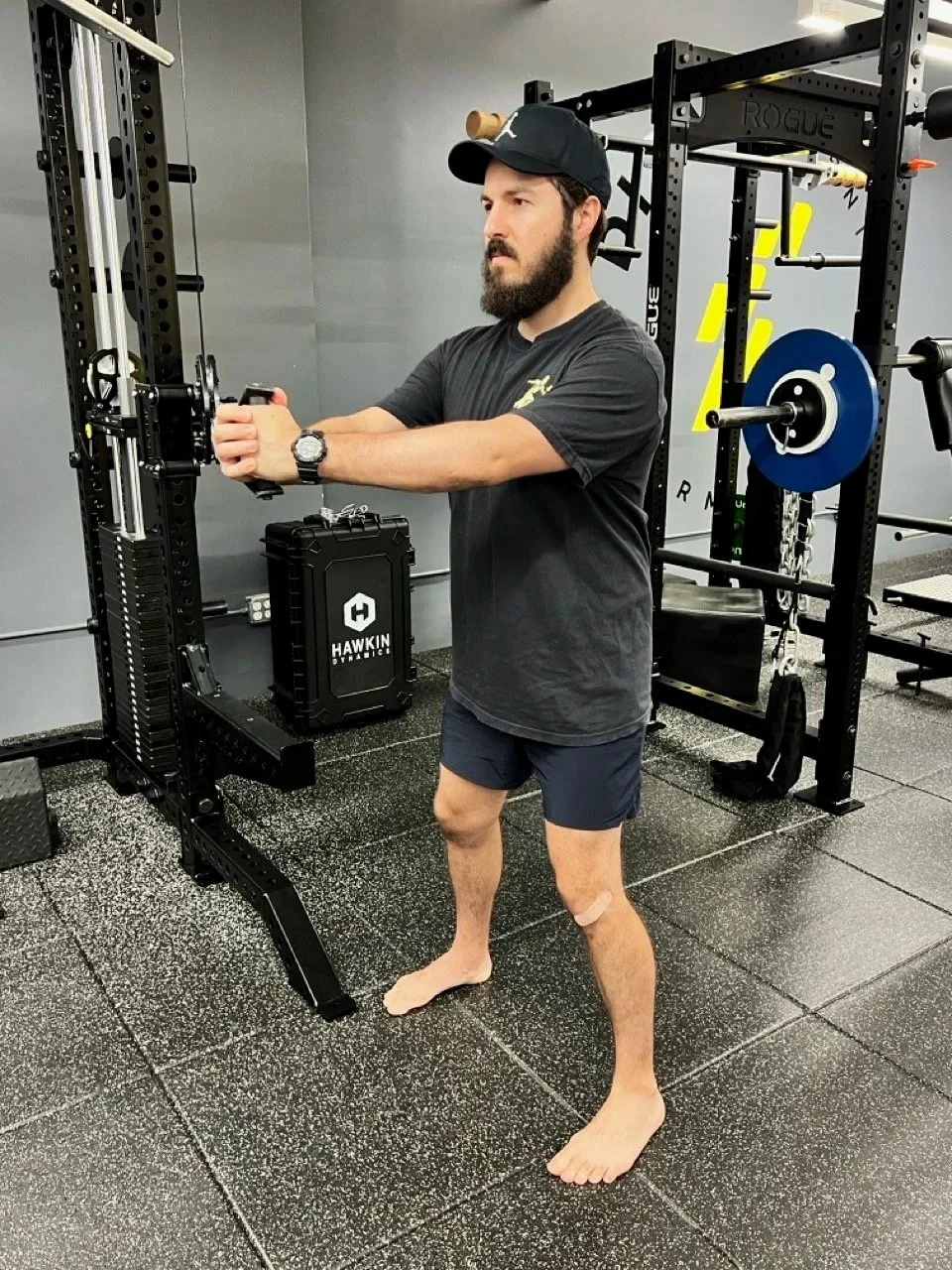
The Palloff Press on the other hand, is a direct core hit. It also is a prerequisite for twisting and rotational cable exercises. The stronger you are here, the better you’ll be able to rotate.
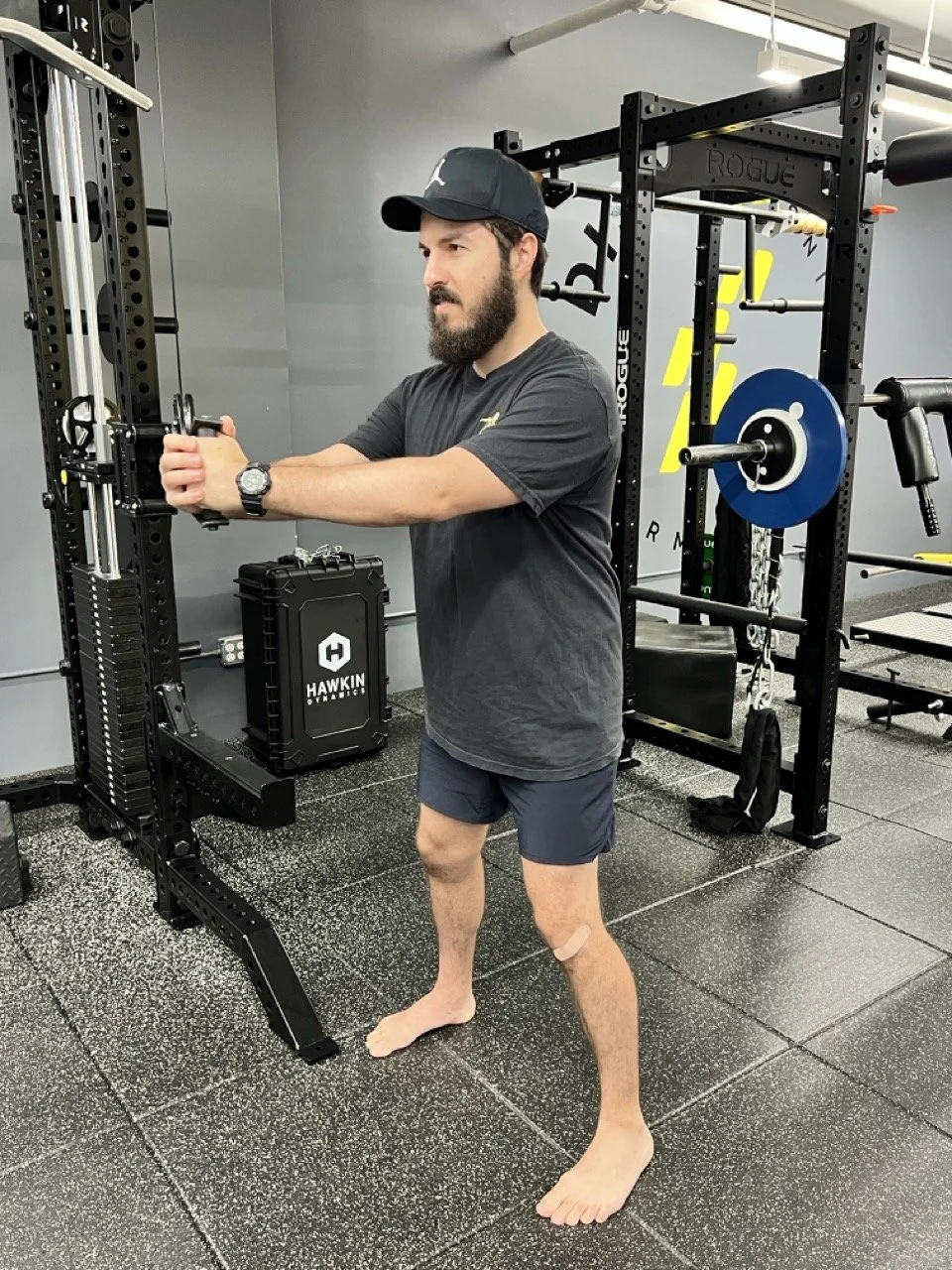
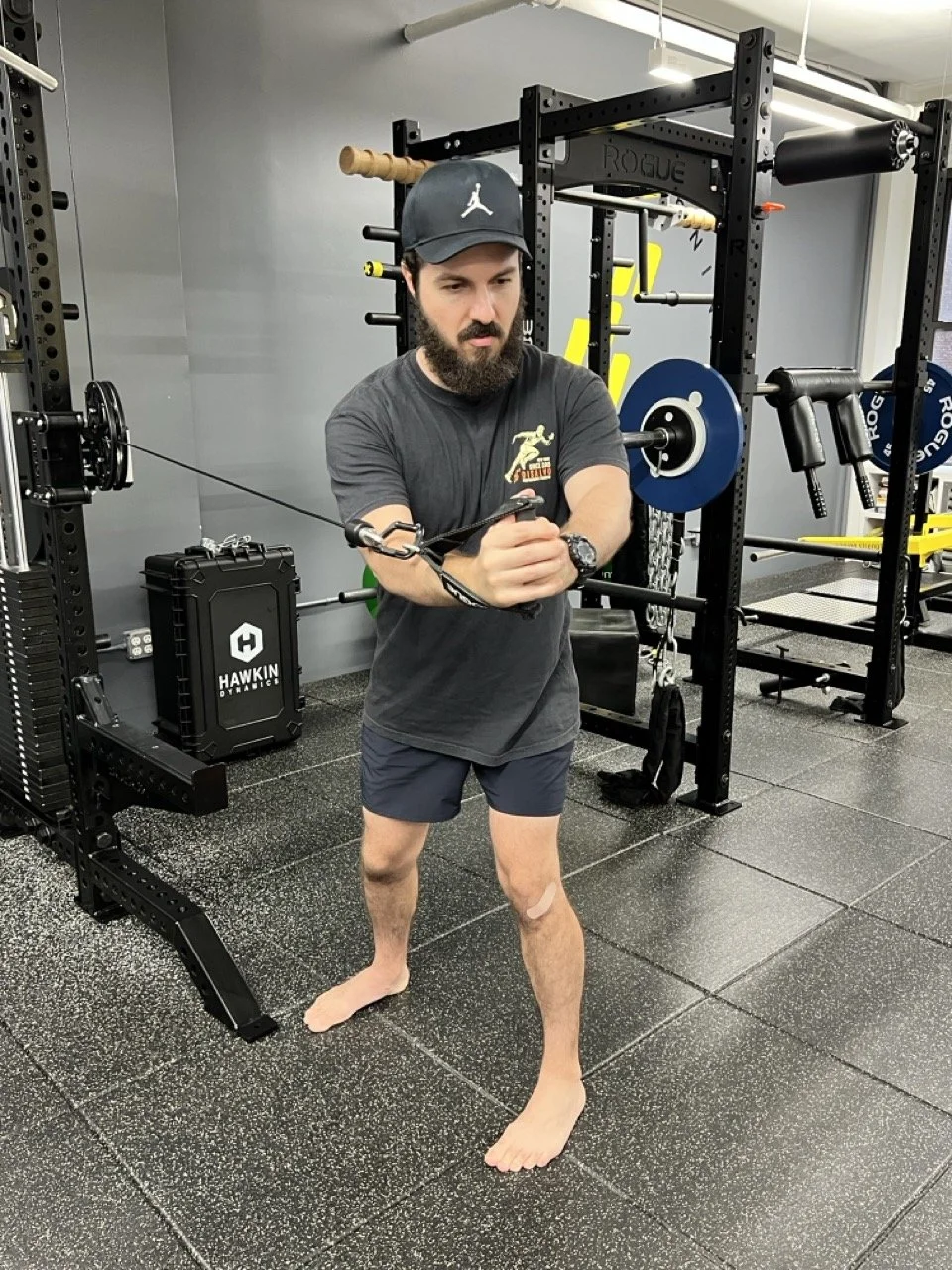
Stand like the athlete in photo #1. Press out in front of you, without letting the cable and weight pull you to the direction its coming from. It should look like Photo #2.
This is known as an anti-rotation exercise, but more importantly, it also helps you learn to balance and shift your weight in your feet to meet the demands of the weight. This is a very important concept in a golf swing and a great way to train it.
Lateral Split Squat
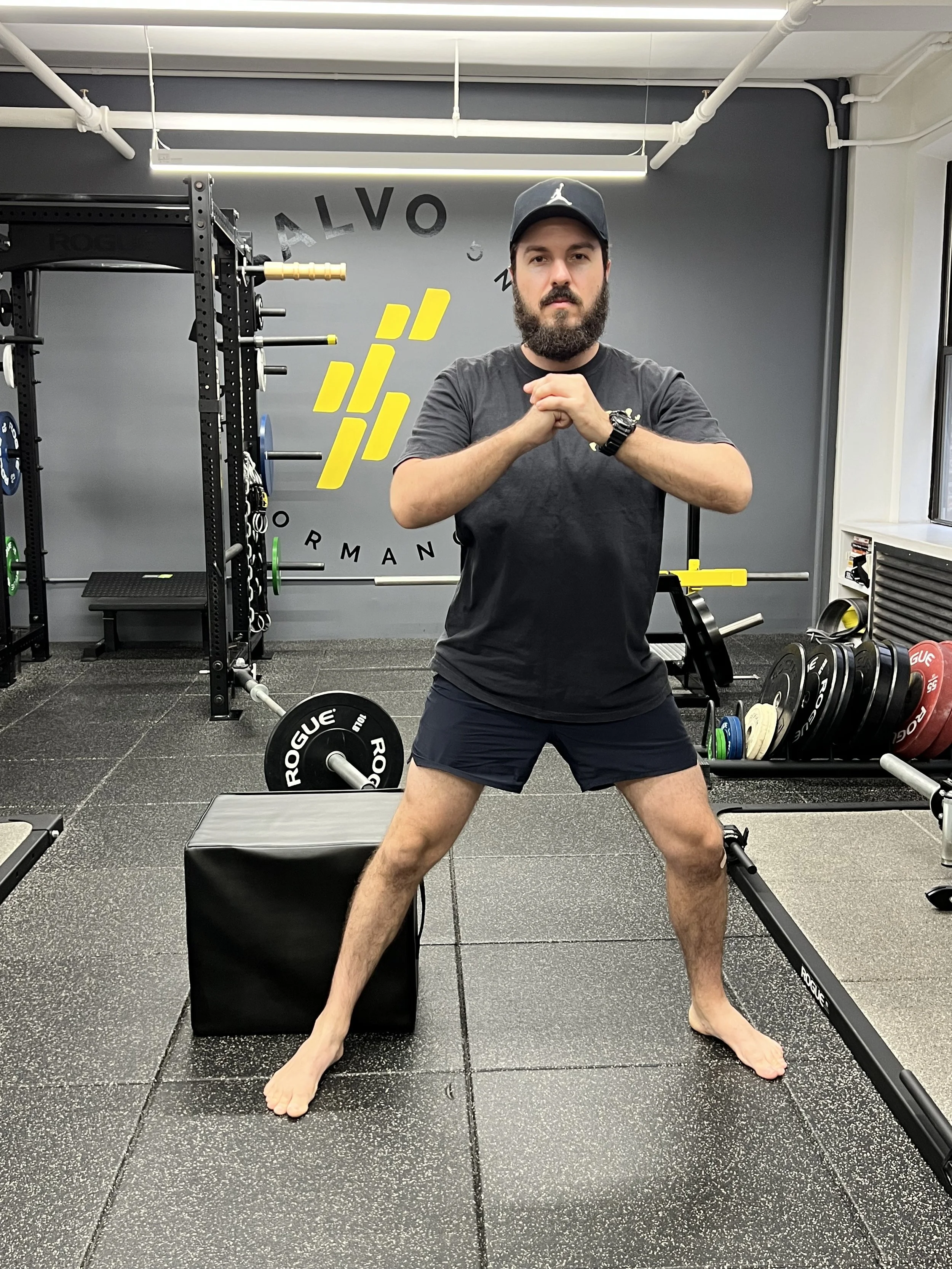
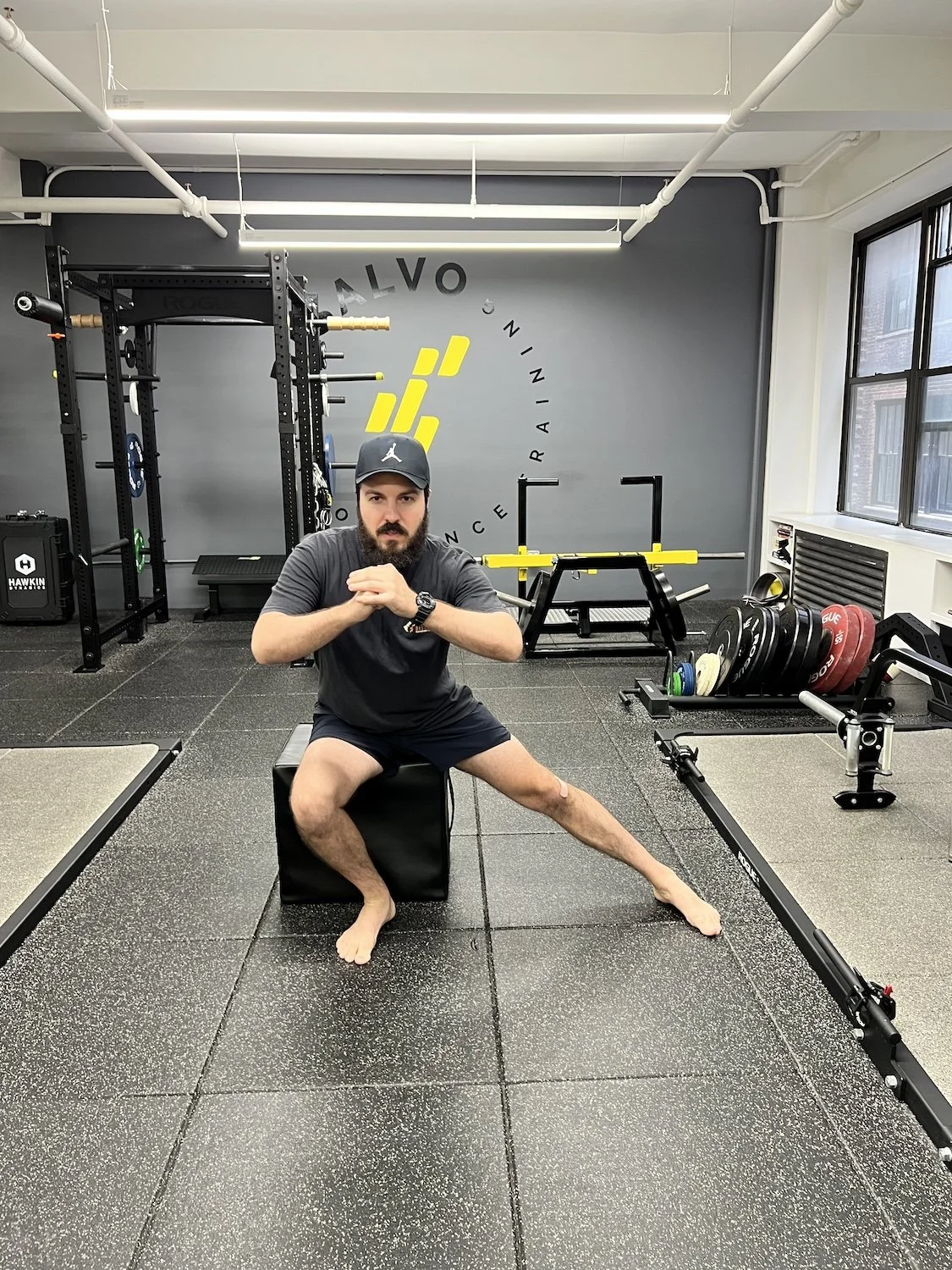
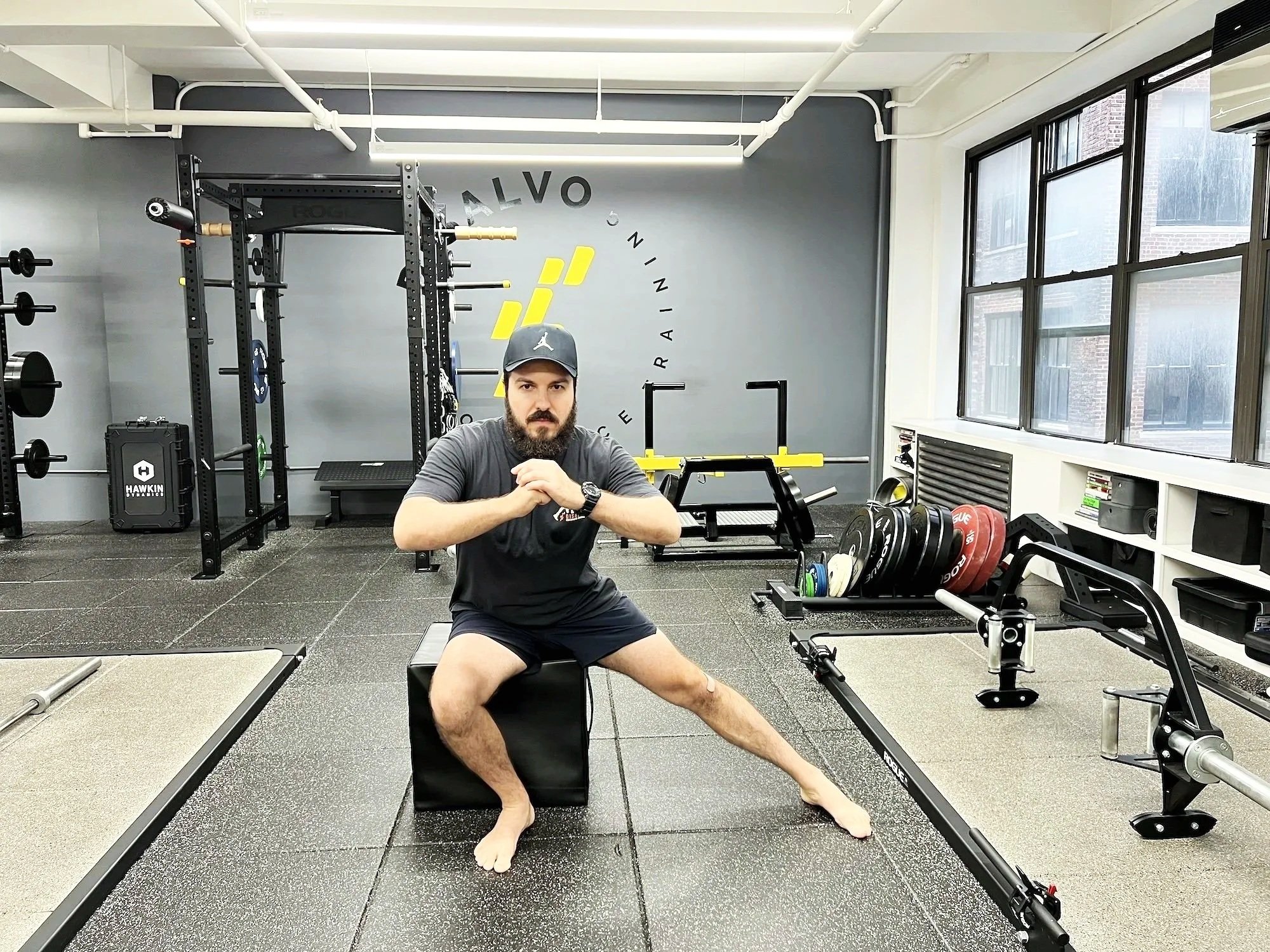
Much of this article has focused on exercises that exist up and down (pardon the golf pun), and to an extent forward and backward, but golf has a lot of side-to-side and rotational movement. In the example of the lateral movement, this calls on your hips and glutes to be strong and mobile enough to move side to side without losing your position or balance, which are two very important considerations in a golf swing.
To perform this exercise, I often like to have the beginner or more novice lifters use a box approximately 14-18” in height. Shift laterally to the box, but don’t sit on it, just make contact with your butt for a solid one-count pause and come back to the start position.
Oblique Cable Twists
Rotational exercises in a golfer’s rolodex should be as endless as their rotation of colorful polos, but sometimes it's easy to get lost in the dumbbells and barbells of the world when you’re on the gym floor. That’s why it’s helpful to master basic concepts of rotation with a simple cable machine, set at shoulder height. Standing with the pulley next to you, with you facing away (perpendicularly), grab across your body with your opposite side arm. This is your strong/primary grip on the handle.
From here, you can do a variety of rotational movements. If you lack regular access to a cable machine, try a band. I prefer the jump-stretch loop styles like the ones sold at EliteFTS.
Worth Mentioning: any squat variation
Over the years, I’ve noticed that the more difficulty an athlete has with a basic squat pattern, the tighter or weaker their hips usually are. So while the squat may not be the most direct return on your gym investment, it is a very good indication to me that you are more or less generally healthy and able to take on a variety of exercises (and lower your injury probability). Keeping or enhancing your ability to squat is a good way to demonstrate your overall fitness and athleticism.
When I say squat variation, I truly mean it. It could be bodyweight squats, kettlebell goblet squats, sandbag squats, barbell back squats, front squats — anything that gets you moving up and down and bringing your hips to or slightly below parallel depth.
Conclusion
If you can do these exercises, or a version of them, you are well on your way to creating a powerful, strong golf swing. More importantly, you’re making your actual human body way more likely to stave off the ill effects of multiple rounds and range buckets smashed each week. If you have any questions, check out our other articles or reach out below.

About the Author: Mark DiSalvo, CSCS
Mark is the founder and owner of DiSalvo Performance Training. He brings over a decade of experience training clients and athletes of all backgrounds and is the strength and conditioning coach to athletes of all levels and disciplines, from youth to professional and Olympic-level.
A graduate of Northeastern University and currently working toward an M.S., he’s an NSCA Certified Strength and Conditioning Specialist (CSCS) and Sports Performance Expert. He’s also a Steve Maxwell Certified Kettlebell Instructor (Levels 1 & 2).
You can read more about him here.